

-
-

-
 7 reviews98,01€ instead ofAdd to cart - 108,90€ This product has multiple variants. The options may be chosen on the product page
108,90€with code BF10 -
-
 4 reviews170,91€ instead ofAdd to cart - 189,90€ This product has multiple variants. The options may be chosen on the product page
189,90€with code BF10 -
 from 139,41€ instead ofAdd to cart - 154,90€ This product has multiple variants. The options may be chosen on the product page
154,90€with code BF10 -
-
-
-
-
11 reviewsfrom 408,51€ instead ofAdd to cart - 453,90€ This product has multiple variants. The options may be chosen on the product page
453,90€with code BF10 -
-
-
1 reviewfrom 125,91€ instead ofAdd to cart - 139,90€ This product has multiple variants. The options may be chosen on the product page
139,90€with code BF10 -
1 reviewfrom 178,11€ instead ofAdd to cart - 197,90€ This product has multiple variants. The options may be chosen on the product page
197,90€with code BF10 -
-



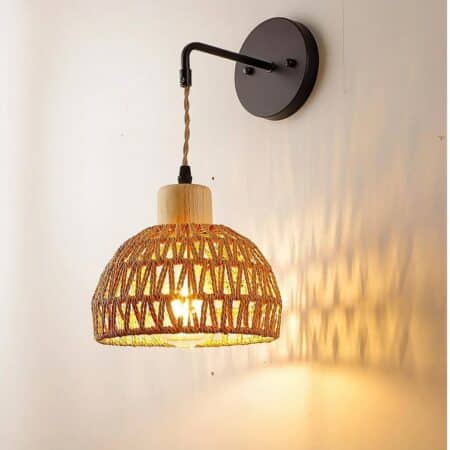
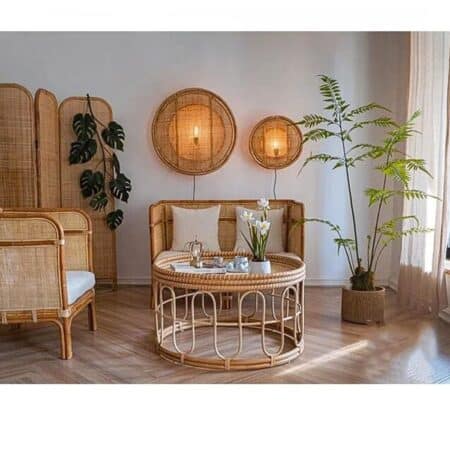
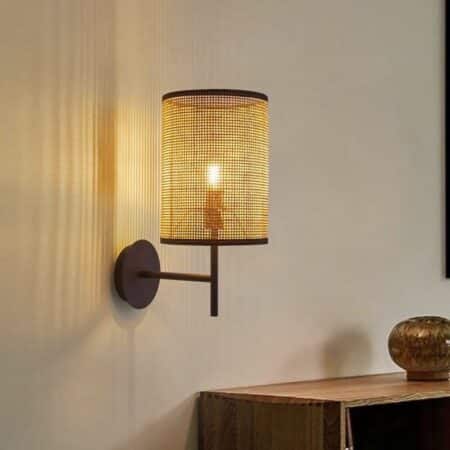
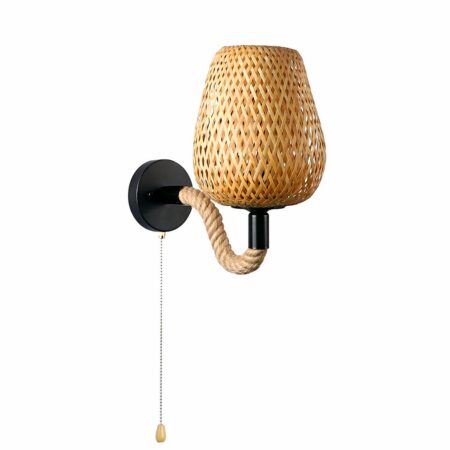


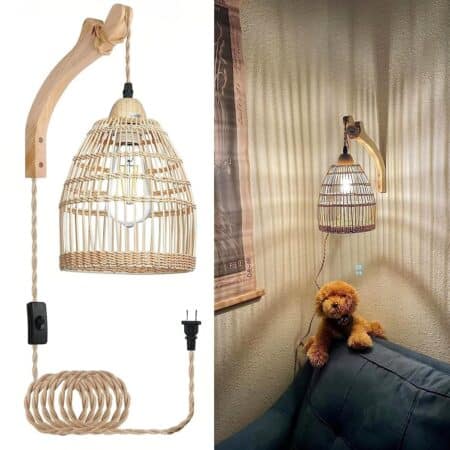
How to choose your rattan wall light?
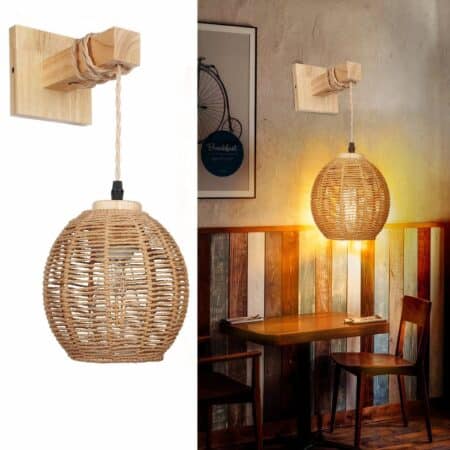
Rattan wall lights transform lighting through openwork weaving that projects graphic shadows. Fixed at 1.60 metres from the floor with warm white LEDs, they structure the space without overheating the natural fibres.
The impact of weaving on light diffusion
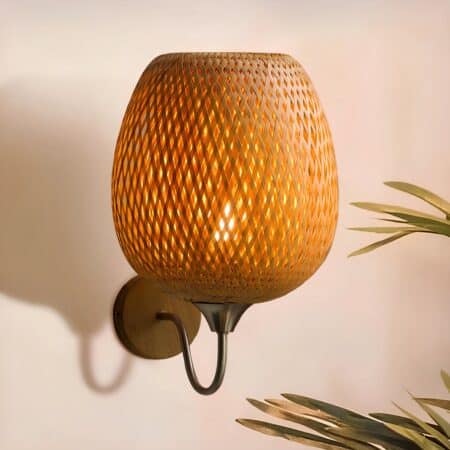
The spacing of the strands determines your ambiance. A loose mesh projects sharp geometric patterns on the wall. The further apart the fibres are, the more pronounced and decorative the cast shadows become.
Tight weaving offers diffused light. This uniform rendering suits functional use better. Your choice will therefore depend on the light intensity you wish in the room.
The format suited to your room's dimensions
Maintaining a coherent visual ratio is paramount. A small wall light fades away on a large expanse of wall. Always measure the width of the support before confirming your lighting purchase.
Adapt the volume according to your ceiling height. In a narrow corridor, favour flat models. This prevents cluttering the passageway whilst maintaining fluid and secure circulation.
Combining with other natural materials
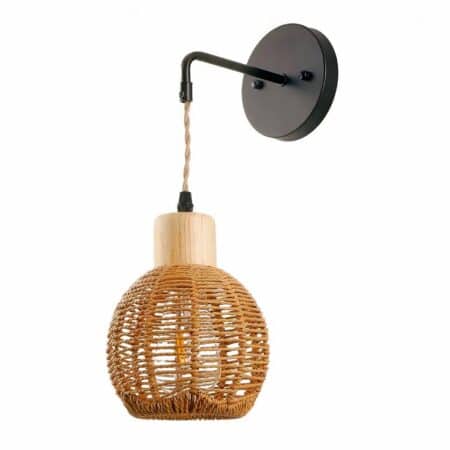
Pair rattan with matt black metal. This contrast brings an industrial touch. The black highlights the blonde tone of the fibre. It's a winning combination for a contemporary living room.
Incorporate touches of glass to lighten the style. Transparency enhances the artisanal work of vegetable weaving.
Choosing the bulb to enhance the fibres
But beyond the object's design, the quality of the lighting depends primarily on the light source chosen.
LED technology for thermal safety
Use exclusively LED bulbs. They produce almost no heat. This is essential to protect dry rattan fibres which are flammable.
Limit the wattage to the equivalent of 40 watts. Excessive intensity eventually burns the material visually. LED thus preserves the original appearance of the luminaire.
Always verify socket compatibility. Most artisanal wall lights use standard E27 or E14 fittings.
The ideal colour temperature
Favour warm white between 2700 and 3000 Kelvins. This yellow tone reinforces the sunny aspect of rattan. It creates a welcoming atmosphere immediately. Cold white should be avoided as it makes the fibre appear greyish.
Test an amber bulb for a reading corner. The light becomes very soft. It's perfect for establishing a climate of absolute relaxation in the evening.
The ambiance gains in depth. The visual rendering becomes very organic.
Protection against colour alteration
Monitor exposure to UV rays. Natural rattan tends to lighten or grey over time. An appropriate bulb limits this premature ageing of the fibres.
Choose bulbs with controlled spectrum. Certain premium models filter aggressive radiation. It's a worthwhile investment to keep your rattan wall light intact for years.
Avoid placing the lamp in direct sunlight. Direct heat weakens the very structure of the vegetable weaving.
Ideal locations for your natural lighting
Once you've found the bulb, you need to determine where to place these pieces to maximise their decorative effect.
A cosy ambiance in the bedroom
Install the wall lights on either side of the bed. The ideal height is around 1.50 metres. This allows you to read without being dazzled by direct light.
Save space on bedside tables. By fixing the light to the wall, you free up space for books or an alarm clock. It's very practical.
Rattan brings immediate warmth. It transforms the bedroom into a truly natural and soothing refuge.
The living room and the cluster accumulation effect
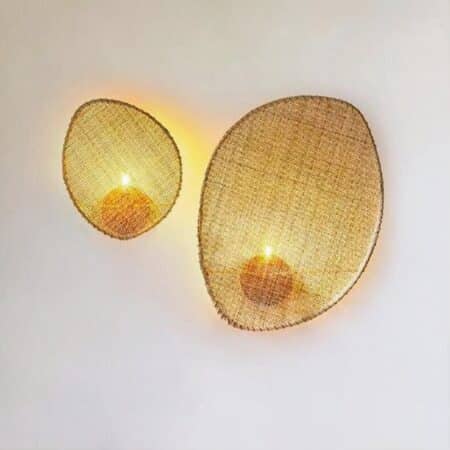
Dare to accumulate several models on a single wall. This technique is called clustering. It creates a powerful focal point in the room. Play with sizes for a livelier rendering. It's a strong trend in décor.
Arrange the lights asymmetrically. Avoid overly rigid alignments. Movement brings dynamism to your accent wall. The visual effect is then much more artisanal.
Vary the types of weaving. Mixing textures enriches the décor.
Passageways and damp rooms
Respect IP standards in the bathroom. Rattan does not tolerate direct water splashes well. Verify that the wall light is installed away from electrical hazard zones.
Prevent mould formation. A poorly ventilated room will blacken natural fibres quickly. Ensure you have effective mechanical ventilation before installing rattan here.
In a corridor, the wall light marks the way. It warms these often cold and purely functional spaces.
Discover our Solar wall light or our Modern wall light for further inspiration. For more ideas, visit our Round wall light.
Installation guide and maintenance advice
For these luminaires to last, careful installation and regular maintenance are essential daily.
Solid mounting of the wall bracket
Choose wall plugs suited to the nature of your partition. Plasterboard requires specific fixings to prevent crumbling. Drill the support cleanly before inserting the screws. A stable base guarantees the safety of the entire luminaire.
Check the support is level with a spirit level. A skew wall light ruins the aesthetic effect you're aiming for in the room.
Test the strength of the mounting bracket. It must support the weight of the rattan diffuser without moving.
Connection to the electrical network
Cut the main circuit breaker without fail. Never handle wires under tension. This is safety rule number one for any DIY enthusiast, even beginners.
Connect the cables to the terminal block or automatic terminals. Respect the colours: blue for neutral and brown for live. Tighten firmly to avoid poor connections.
Carefully replace the wires in the wall box. Nothing should protrude once the wall light cover is fitted.
Dry cleaning techniques
Dust weekly with a soft cloth. Dust embeds easily in the gaps of the weaving. Frequent maintenance prevents deep soiling of the vegetable fibre.
Use the brush head of the hoover. It's the most effective method for dislodging dirt without damaging the rattan. Set the power to minimum to remain gentle.
Avoid aggressive chemical products. They dry out the material and make it brittle. A little soapy water is sufficient in case of stains.


